Trait Pair and Relationship Dynamics

Every relationship has a signature. Not just the feeling you get when you're with someone, but the underlying architecture of how two charts interact, overlap, challenge, and complement each other. With Pair Traits & Dynamics, 12andus now maps that architecture across 20 distinct relationship dimensions.
What Pair Traits actually measures
When two birth charts come together, two separate astrological systems emerge. Synastry compares how one person's planets aspect the other's, revealing the live current between two individuals: who triggers whom, where attraction sparks, where friction builds. The composite chart creates a third entity entirely, the midpoint chart that represents the relationship itself as its own organism with its own character.
Pair Traits draws from both. It identifies tens of aspects in each chart type, codes them, and maps each one against 20 relationship traits. The result is a profile of what makes a specific pairing unique, not in vague terms, but grounded in the actual planetary geometry between two people.
The 20 traits were chosen to cover the full spectrum of how two people can relate, beyond the usual romantic lens. Some are intuitive:
Romantic Attraction - the pull, the desire to show up for each other
Sexual Chemistry - physical magnetism and intimate energy
Emotional Bond - the depth of inner connection and understanding
Others capture dynamics that astrology has always spoken to but rarely quantified:
Mutual Growth - how much the connection pushes both people to evolve
Independence - the capacity to maintain individuality within the bond
Business Compatibility - how well two people collaborate on practical goals
Spiritual Connection - a sense of deeper meaning or soul recognition
The full list includes Communication Ease, Trust & Security, Harmony, Passion, Intellectual Spark, Playfulness, Shared Values, Long-term Stability, Friendship, Adventure, Empathy, Creativity Together, and Humor. Each one is scored independently.
How scoring works
Not all aspects carry the same weight. A Sun-Moon conjunction in synastry contributes more than a minor sextile between asteroids. The scoring system reflects this through position-based weighting: the most powerful aspects in each chart have more influence on the final trait profile. Each aspect-trait association also has a strength rating, so a particular Venus-Mars square might strongly indicate Passion but only mildly suggest Adventure, depending on the signs involved.
There's also a rarity adjustment. Some traits naturally appear in fewer aspect combinations. Without correction, they would always score lower. The system compensates for this, ensuring that a genuinely strong Spiritual Connection doesn't get buried under traits that simply have more data points.
Percentile ranking
Behind the scenes, each trait is ranked against hundreds of thousands of charted pairs. What you see is a "Top" ranking: if your Emotional Bond shows "Top 2.5%", it means only 2.5% of sampled pairs score higher on that dimension. In other words, only 1 in 40 pairs may score this high. This tells you at a glance how distinctive that particular quality is in your particular relationship, without needing to interpret abstract numbers.
Not just for couples
The trait definitions were written to apply across relationship types. Romantic Attraction, for instance, is described as "the romantic pull and desire to please each other" for couples, but in family or professional contexts, it reflects mutual admiration and warmth. Sexual Chemistry becomes shared vitality and creative intensity. The astrological aspects don't change based on how two people label their relationship, and neither do the readings.
This makes Pair Traits useful for understanding a business partnership, a parent-child dynamic, or a long-standing friendship just as much as a romantic relationship.
What you see in the report
Traits are presented in order of strength, highest-scoring first. Each one shows its percentile ranking, a brief description, and an expandable section revealing the contributing aspects. You can see exactly which synastry or composite aspect fueled a particular score, along with a detailed reading of what that aspect means for the trait in question.
There's also an AI-generated synthesis that summarizes the overall dynamic, pulling together the trait profile into a narrative overview of the relationship's character.
The underlying data
The trait-aspect associations were generated through systematic analysis of astrological aspect patterns and their observed correlations with relationship dynamics. Each of the 20 traits is mapped against aspect codes that combine planet, sign, and aspect type. This isn't a simple lookup table: the same Venus-Jupiter trine might contribute to Romantic Attraction, Playfulness, and Shared Values simultaneously, with different strength levels for each.
The system currently processes synastry and composite aspects independently, then combines their contributions into a unified score. This means the report captures both the interpersonal chemistry (synastry) and the relationship's inherent character (composite) in a single view.
To generate a Pair Traits & Dynamics report, you need at least two birth data profiles in your astro data list. The percentile rankings update as more pairs are analyzed, so the comparative context grows more precise over time.
PDF-отчеты

Всесторонние PDF-чтения на 100–300+ страниц по натальным картам, отношениям и прогнозам. Погрузитесь в тонкости планетарных положений с нашими отчётами, тщательно раскрывающими аспекты и нюансы. Этот астрологический шедевр служит пожизненным справочником и предлагает глубоко персонализированное понимание вас и ваших отношений. Ваша небесная книга историй ждёт вас.
Сфокусированные PDF-ответы

Тематические PDF-отчёты, предоставляющие ответы по натальной карте, отношениям и прогнозам. Каждый содержит около 2000 слов и глубоко раскрывает одну тему с учётом всех астрологических положений. Эти целенаправленные инсайты помогают лучше понять любовные сценарии, карьерный потенциал и жизненные переходы. Ищете ли вы советы по романтике, работе, личностному росту или будущим тенденциям — эти отчёты предлагают ясные и значимые ответы.
Персональное Ежедневное Чтение

Чат Рождение и Прогноз
Чат Пара и Прогноз
Чат Пути Мудрости
Черты и Динамика пары

Откройте 20 черт отношений между двумя людьми на основе аспектов синастрии и композитной карты: Эмоциональная Связь, Романтическое Влечение, Сексуальная Химия, Доверие & Безопасность, Лёгкость Общения, Гармония, Страсть, Интеллектуальная Искра, Взаимный Рост, Игривость, Общие Ценности, Независимость, Духовная Связь, Деловая Совместимость, Долгосрочная Стабильность, Дружба, Приключения, Эмпатия, Совместное Творчество и Юмор.
Чтения карт

Погрузитесь в сложности своей астральной истории с помощью наших глубоко персонализированных астрологических интерпретаций. От глубоких откровений в вашем анализе рождения до динамики синастрии, композитных и транзитных исследований, каждое чтение тщательно подобрано для вашей уникальной космической сюжетной линии. Нажмите для астрологического опыта, созданного с непревзойденной точностью и детализацией.
Астрологические песни
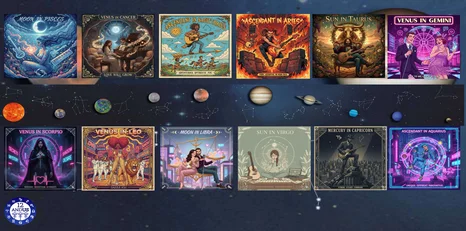
Игривая коллекция песен, каждая из которых вдохновлена планетой в знаке зодиака. Будь вы огненным Солнцем в Овне, мечтательной Луной в Рыбах или чем-то между ними, теперь вы можете услышать, как атмосфера вашего расположения оживает через музыку. Весело, дерзко и идеально для того, чтобы делиться с друзьями.
Знаменитости
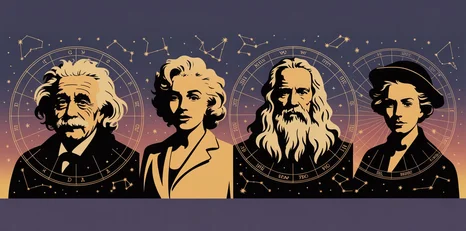
Просмотрите более 50 000 знаменитостей и узнайте, кто разделяет ваши астрологические положения. Ищите по имени, году рождения, стране или находите знаменитостей с общими аспектами и планетарными позициями. Добавьте любую знаменитость в свой список данных рождения для создания отчётов — доступно для зарегистрированных пользователей.
Подписывайтесь на нас в соцсетях для ежедневного астрологического настроения и бесплатных PDF-купонов для персонализированных чтений.