Pluto in Synastry: Obsession, Power Struggles, and Transformation in Relationships

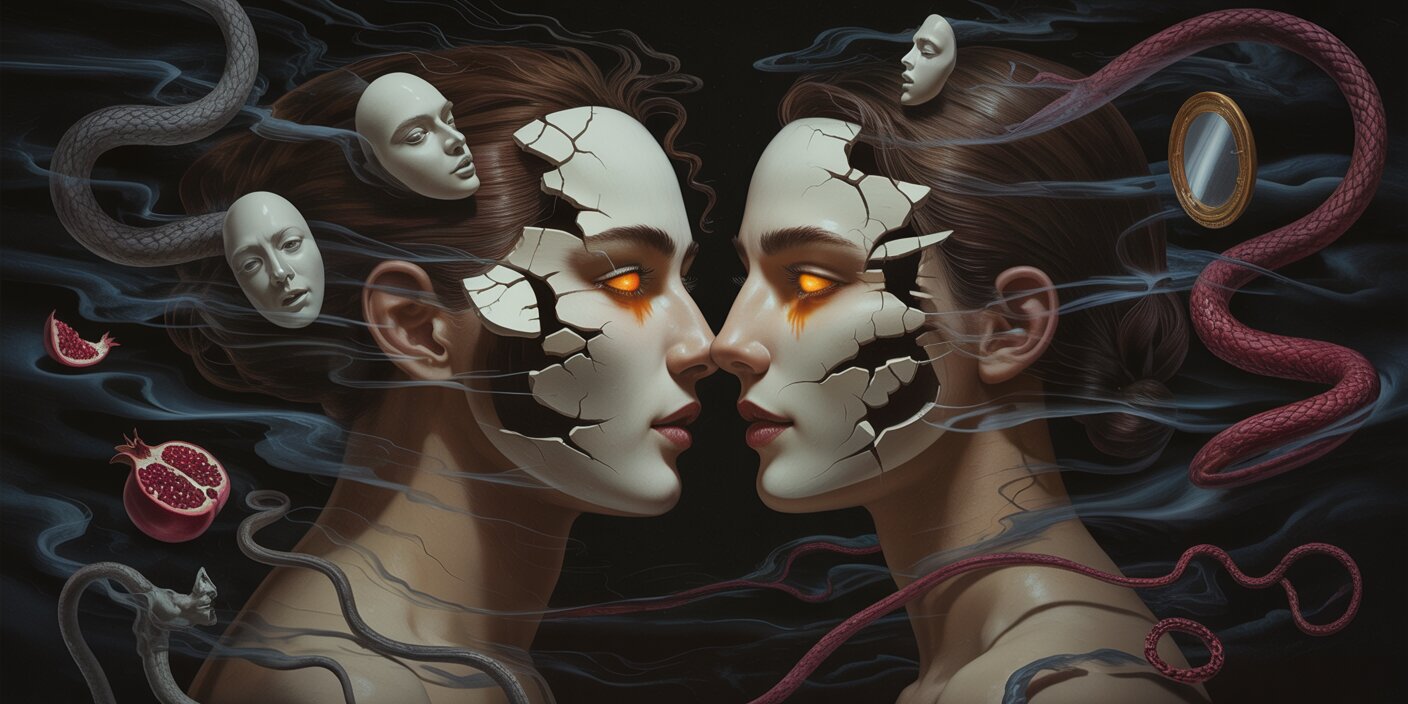
Pluto in synastry has a reputation, and honestly, it has earned it. If most planetary connections are like meeting someone at a café and deciding whether you like their taste in music, Pluto is more like accidentally locking eyes with a stranger and somehow ending up discussing your childhood wounds two hours later. There is nothing casual about it. When Pluto shows up between two charts, the relationship tends to feel intense, consuming, and slightly suspicious, as if something bigger than both people is quietly running the show.
At its core, Pluto is not interested in romance as we usually imagine it. It is not here for light flirting, polite affection, or keeping things breezy. Archetypally, Pluto belongs to the underworld. It represents descent, transformation, and the uncomfortable truth that growth often requires something to fall apart first. From a Jungian perspective, Pluto aligns closely with the shadow, those parts of ourselves we would prefer not to acknowledge but somehow keep bumping into, especially in close relationships.
In synastry, Pluto has a talent for making the invisible visible. It tends to activate unconscious material between two people, often through projection. One partner becomes the carrier of something the other has repressed. The Pluto person, in particular, may feel an almost compulsive need to understand, uncover, or even penetrate the psyche of the other. This can feel flattering at first. Who would not want to be deeply seen. But very quickly, it can also feel like being examined under a psychological microscope you did not exactly agree to.
The attraction in Pluto connections is rarely mild. It is magnetic in a way that can feel both exciting and slightly alarming. People often describe it as irresistible, even when they are fully aware that the relationship might not be simple or easy. There is a sense of inevitability, as if the connection has its own gravity. From a Jungian angle, this intensity often comes from projection. The qualities we are most fascinated or disturbed by in another person are often reflections of something within ourselves that has not yet been integrated. Pluto simply turns the volume all the way up so it is impossible to ignore.
If you want a fictional couple that captures this energy with very little subtlety, Christian and Anastasia from Fifty Shades of Grey are a clear example. Their connection revolves around control, vulnerability, obsession, and the negotiation of power. It is not exactly what you would call low stakes dating. The intensity between them forces both characters to confront their own fears, boundaries, and psychological patterns, sometimes gracefully, sometimes very much not.
Literature has been exploring Plutonian relationships long before modern astrology gave it a name. In Wuthering Heights, written by Emily Brontë, Catherine and Heathcliff embody a connection that is obsessive, consuming, and impossible to neatly resolve. They do not just love each other, they define and distort each other. Their bond is entangled with identity, revenge, longing, and emotional extremity. It is dramatic, inconvenient, and about as far from a calm partnership as one can get, which is precisely why it fits Pluto so well.
If we look at real life, the relationship between Cleopatra and Mark Antony carries a distinctly Plutonian tone. Their connection was passionate, politically charged, and ultimately destructive. Power, loyalty, obsession, and downfall were all woven together. This is often how Pluto operates outside of fiction as well, blurring the line between love and fate, and occasionally dragging entire empires into the emotional narrative.
Of course, where there is this much intensity, there is also the question of power. Pluto does not do neutral. It tends to introduce dynamics around control, dominance, and vulnerability. Sometimes one person feels more psychologically powerful, more aware, or more emotionally penetrating. The other may feel exposed, transformed, or occasionally overwhelmed. This does not automatically mean the relationship is unhealthy, but it does mean that unconscious behavior can quickly turn into power struggles.
These struggles can take subtle forms. It might show up as emotional manipulation, possessiveness, or the desire to change the other person in ways that are framed as helpful but feel suspiciously like control. It can also manifest as fear of loss, which leads to holding on too tightly. Both people are wrestling with their own shadow material, but instead of integrating it internally, they attempt to manage it externally through the relationship. This is where things can get messy, and not in a cute, romantic comedy kind of way.
Pluto also has a habit of stirring up emotional extremes. The connection can feel deeply bonding one moment and overwhelming the next. There may be cycles of closeness and distance, intensity and retreat. This push and pull often reflects the difficulty of confronting shadow material. Part of the psyche wants transformation, while another part would very much prefer to go back to pretending everything is fine. Pluto does not really allow for that kind of denial, which is both its gift and its challenge.
One of the most significant roles Pluto plays in synastry is facilitating transformation, and it rarely does so gently. These relationships often involve moments of crisis, not necessarily dramatic in an external sense, but deeply impactful on a psychological level. Conflicts can bring hidden fears and desires to the surface. Situations may arise that force both people to confront truths they would rather avoid. Ego defenses tend to crack under Pluto’s influence, which can feel uncomfortable but also creates the possibility for genuine change.
Different Pluto aspects will shape how this energy is experienced, but the underlying themes remain similar. When Pluto connects with personal planets like the Sun, Moon, Venus, or Mars, the effect is particularly strong. A Sun Pluto connection can challenge identity and self expression, sometimes leading to struggles over autonomy and influence. A Moon Pluto connection often brings emotional intensity and deep bonding, but also the potential for emotional entanglement that feels hard to untangle. Venus Pluto is famous for passionate attraction, the kind that inspires poetry and questionable decisions in equal measure. Mars Pluto tends to amplify both sexual chemistry and conflict, which can be a thrilling combination until it is not.
Hard aspects such as squares and oppositions tend to make the tension more obvious. Power struggles are more likely to surface directly, and projection can be harder to recognize. These relationships can feel like a constant negotiation between attraction and resistance. Softer aspects like trines and sextiles may allow the intensity to flow more smoothly, but they do not remove it. Pluto does not suddenly become lighthearted just because the aspect is harmonious. It simply expresses its depth with less friction, which can sometimes make the transformation feel more natural, and occasionally sneak up on you when you least expect it.
From an evolutionary or Jungian perspective, Pluto in synastry is not really about compatibility in the usual sense. It is about growth. It raises questions that are not always comfortable. What are you projecting onto this person. What parts of yourself are you trying to control or avoid. Where are you giving away your power, or attempting to take someone else’s. These are not exactly first date questions, but Pluto is not particularly concerned with social niceties.
The potential of Pluto connections lies in their ability to facilitate deep psychological change. When both people are willing to engage consciously, these relationships can lead to greater self awareness, emotional honesty, and a more integrated sense of self. They can help individuals reclaim disowned parts of their psyche and develop a more authentic way of relating. This is the part where Pluto starts to look less like a villain and more like a very intense therapist who does not accept excuses.
That said, consciousness is key. Without it, Pluto dynamics can become toxic. Power struggles can escalate, boundaries can blur, and emotional intensity can turn into something destructive rather than transformative. It becomes important to maintain self awareness, establish clear boundaries, and take responsibility for one’s own psychological material. In other words, it helps to remember that just because the connection feels fated does not mean you should abandon all common sense.
In the end, Pluto in synastry is less about easy love and more about meaningful encounters. These relationships tend to leave a lasting impact, whether they endure or not. They change how we see ourselves and others. They bring us closer to parts of our psyche that we might otherwise spend a lifetime avoiding. And while they may not always be comfortable, they are rarely insignificant.
Pluto does not enter a relationship quietly, and it certainly does not leave things as it found them. It disrupts, exposes, and transforms. Sometimes it feels like everything is falling apart, but more often than not, it is making space for something more honest to emerge. Whether that feels like a gift or a challenge depends largely on how willing we are to meet ourselves in the depths where Pluto prefers to work.
包括的なPDFレポート

ネイタルチャート、関係分析、予報のための100〜300ページ以上にわたる包括的なPDF解説。私たちのレポートでは、各惑星の配置の複雑さに深く飛び込み、そのアスペクトと微妙なニュアンスを丁寧に調べます。占星術の傑作として作成されたこのレポートは、あなたとあなたの関係性の両方について、最もパーソナライズされた洞察を提供する生涯の参考資料として役立ちます。あなたの天体の物語がお待ちしています。
毎日のビデオ星占い

パーソナル・デイリー・リーディング

毎日の占星術クイズ
20秒で占星術の知識を試そう。宇宙に勝てるかな?登録ユーザーはPlutokensを獲得してPDFレポートと交換できます。
誕生と予測チャットボット
ペアと予測チャットボット
叡智の道チャットボット

トレイトマップ
トレイトマップはあなた自身から始まります。厳選された性格特性のリストを探索し、それらを反映する占星術の配置を発見します。各配置は明確に説明され、なぜそれが当てはまるのか、そしてあなたの実体験がどのようにチャートに結びついているかを示します。
ペアの特性とダイナミクス

シナストリーとコンポジットのアスペクトに基づく、二人の間の20の関係特性を発見しましょう:感情的な絆、ロマンチックな魅力、性的な相性、信頼 & 安心感、コミュニケーションの容易さ、調和、情熱、知的な刺激、相互成長、遊び心、共通の価値観、独立性、スピリチュアルなつながり、ビジネスの相性、長期的な安定性、友情、冒険、共感、共同創造性、ユーモア。
チャートリーディング
あなたの星の物語の複雑さを、私たちの深く個人化された占星術のリーディングで探求しましょう。バース分析での深遠な啓示から、シナストリー、コンポジット、トランジットの探求のダイナミクスまで、各リーディングはあなたのユニークな宇宙の物語のために丁寧に選び抜かれています。比類のない精度と詳細で作成された占星術体験をクリックしてください。
イニシエーション:生成の輪
出生チャートを自己発見の旅として歩みましょう。各惑星のイニシエーションに挑み、アセンダント(世界に見せる仮面)から始めます。
パッセージ:転回の輪
惑星たちは今、あなたのチャートを通過しています。それぞれのトランジットは試練をもたらします——空があなたの出生チャートと交わる圧力点です。インタラクティブなパッセージを通じて、あなたのアクティブなトランジットをナビゲートしましょう。
占星術の歌
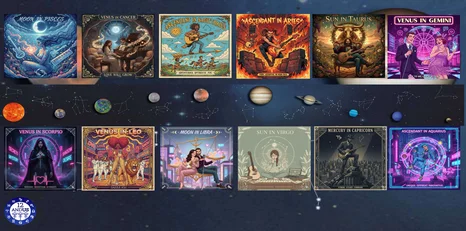
各星座にある惑星にインスパイアされた遊び心のある歌のコレクション。あなたが牡羊座の燃えるような太陽でも、魚座の夢見がちな月でも、またはその間の何かであっても、今では音楽を通してあなたの配置の雰囲気が生き生きとするのを聞くことができます。楽しく、生意気で、友達と共有するのに最適です。
有名人
50,000人以上の有名人を閲覧し、あなたと同じ占星術的配置を持つ人を発見しましょう。名前、生年、国で検索したり、共通のアスペクトや惑星配置を持つ有名人を見つけましょう。任意の有名人を出生データリストに追加してレポートを作成できます(登録ユーザー限定)。
SNSでフォローして、毎日の占星術ムードや、パーソナライズされたリーディング用の無料PDFクーポンコードをゲットしましょう。