Declinations calculator: parallels and out of bounds
An ordinary chart is flat. It records how far around the zodiac each planet stands and nothing else, which means it misses a whole dimension: how far north or south of the celestial equator the planet actually is. That measurement is its declination, and two planets can be in signs that make no aspect at all while standing at exactly the same height in the sky.
Cast the chart
Declinations
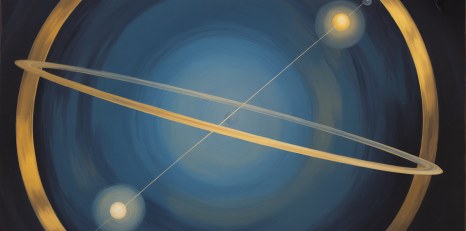
When they do, they are in parallel, and a parallel behaves like a conjunction — the two are in contact whatever the signs say. When one is as far north as the other is south, they are contraparallel, and that reads like an opposition. These contacts are the reason a chart sometimes behaves as though two planets are connected when the longitudes say they are strangers.
The second thing declination gives you is out of bounds. The Sun never passes about 23°26' of declination, which is the tilt of the Earth. A planet that goes beyond it is outside the boundary the Sun sets, and astrologers read it as operating outside the usual rules — brilliant, unruly, hard to socialise. The Moon does this often, Mars and Mercury less so, and an out-of-bounds Moon in a birth chart is one of the most reliably noticeable things in this technique.
Read declinations as a second opinion rather than a replacement. They confirm, complicate or quietly explain what the longitudes have already told you, and they are most valuable exactly where the ordinary chart seems to be missing something — a pair of planets that clearly work together with no aspect between them is usually a parallel.
Planetary declinations need no birth time worth speaking of. The Moon's changes fastest and is the one an unknown time affects most, and the angles need a time as always, but the parallels between planets and the out-of-bounds readings survive an uncertain birth hour better than most techniques.
Questions people ask
What is declination in astrology?
How far north or south of the celestial equator a planet stands, measured in degrees. It is the dimension an ordinary chart leaves out, since a chart records only position around the zodiac.
What is a parallel?
Two planets at the same declination on the same side of the equator. It works like a conjunction, and it can join planets that make no aspect at all by longitude. On opposite sides it is a contraparallel, read like an opposition.
What does out of bounds mean?
That a planet has gone beyond about 23°26' of declination — further from the equator than the Sun ever travels. Such a planet is read as acting outside the usual limits. The Moon does it most often.
Do I need my birth time?
Less than for most techniques. The planets' declinations change slowly, the Moon's fastest; only the angles really require an accurate time.
Follow us on social media for the daily astrological mood and occasional free PDF coupon codes for personalized readings.